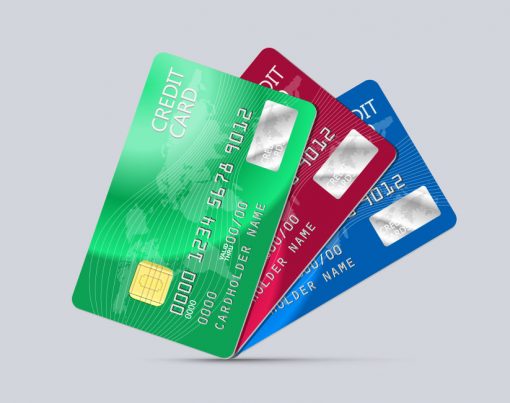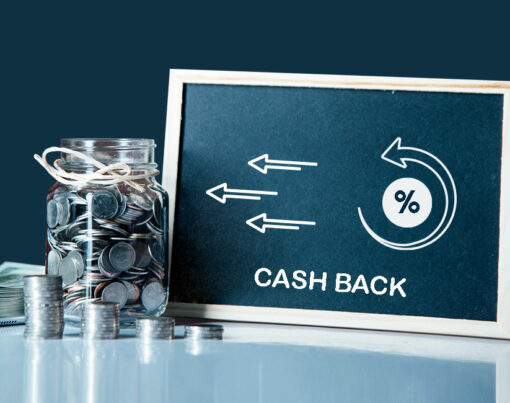

Isn’t it very appealing to buy something at a certain price and then get back some of the money you paid in one form or another? of course it is, everyone likes “free money” after all. This is indeed a strategy that businesses are using today to keep their customers, to attract more new ones and also to increase their sales. Cashback and rewards are two examples of applying this strategy. In this article, we examine what cashback and rewards are, how they are different from each other, what are their advantages and disadvantages, which businesses in what countries offer better cashback or rewards and how you should redeem cash/rewards after your purchase.
What is cashback and what is point reward?
As the name implies, cashback is a redemption option which gives you as a customer the opportunity to earn a percentage of your money from every purchase you make using the cashback credit card. In addition to being beneficial for businesses in several ways, cashback provides customers with incentive to buy from a certain business that offers it. Cashback percentage sometimes exceeds 10% – and the more you spend on a particular website, a shopping center or even a grocery store, the bigger the cashback percentage you are entitled to.
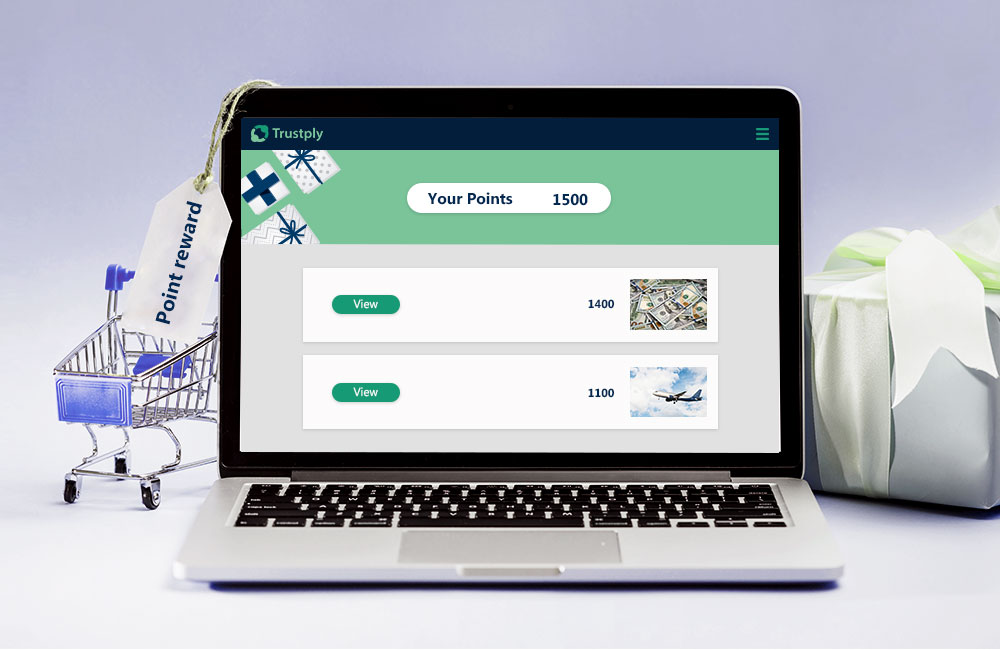
When a business offers you reward, it means that you earn reward points on every purchase you make from that business. Reward points are not real cash and you can collect them and spend them to make other purchases only from that business or from other businesses which accept that certain reward, or you can exchange them with gift cards or even with real cash in a bank. Of course, if you would like to exchange your point rewards only with cash, then you will receive less money than the value of the points you have. Reward points are different in value but as it usually goes, higher-value purchases will earn you more points than smaller value purchases.
Types of cash-back cards
Cash-back cards fall into three main categories including flat-rate, bonus category and rotating category;
Flat-rate
Some cash-back cards offer the same amount of cashback on every purchase. The best flat-rate cash-back cards earn you at least 2% cashback on all purchases, with some cards offering up to 2.5%, such as the Alliant Cashback Visa® Signature Credit Card (2.5% cashback on all purchases, up to $250 in cashback rewards per billing cycle). These cards are great for consumers looking for a simple cash-back program that requires minimal effort to reap great rewards. The Citi® Double Cash Card, which offers 2% cashback on every purchase (1% cashback when you buy, plus an additional 1% as you pay for those purchases) and charges no annual fee, makes CNBC Select’s list of the best cash-back cards.
Bonus categories
Many cash-back cards offer bonus cashback in certain categories, such as grocery stores, travel, gas stations and entertainment. Sometimes cashback in the bonus categories is limited to a certain amount of spending each year, but it can also be unlimited. The Blue Cash Preferred® Card from American Express gives cardholders 6% cashback at U.S. supermarkets on up to $6,000 per year in purchases (then 1%), 6% cashback on select U.S. streaming subscriptions, 3% cashback on transit and at U.S. gas stations and 1% cashback on other purchases.
Rotating categories
Other cash-back cards offer 5% cashback in select categories that rotate throughout the year (typically changing each quarter). Common categories include restaurants, gas stations and grocery stores. These cards are popular among consumers looking to maximize rewards. The Discover it® Cashback and Chase Freedom® both offer 5% cashback in rotating categories on up to $1,500 in combined quarterly purchases after you activate the bonus every quarter. After you reach the limit, it’s 1% on all purchases [1].
Types of point reward cards
Point reward cards are categorized into four types. They include Fixed-Value Reward Points, Airline Frequent Flyer Points, Hotel Reward Points and Transferrable Rewards Points.
Fixed-Value Reward Points
Our first group includes all the rewards points that are assigned a specific cash value. These points are like a foreign currency that is pegged to the U.S. dollar. Most fixed-value rewards are assigned an exact value, but some may fluctuate within a narrow range.
Airline Frequent Flyer Points
Unlike the airline rewards programs included in the fixed-value group, traditional frequent flyer programs don’t tie the number of miles you need for redemption to the retail cost of a flight. In general, the cost of travel is determined by either the distance you fly or the region of the world you want to visit.
Hotel Reward Points
Hotel points are a relatively straightforward rewards currency. Generally, more expensive hotels are assigned a higher category and require more points to book. The cost of a standard room, however, is fixed for all hotels in the same category, so you’ll need the same number of points for a category-5 Hyatt whether you’re staying in Miami, Paris, or Hong Kong.
Transferrable Rewards Points
Transferable points are the most flexible type of rewards because you can convert them into other types of loyalty points. When you transfer these points to an airline or hotel, they take on all the prices and rules of the partner program. But you can’t transfer airline or hotel points back into transferable points once you have transferred points to a partner [2].
How to redeem cashback
Cash-back cards usually only provide a few redemption options. Some cards allow you to redeem cashback at any amount, while others require you to reach a minimum amount, typically $25. Here are the most common ways you can redeem cash back. Statement credit: Apply cashback as a credit to your account balance. This helps offset the cost of your bill. However, you still need to make the minimum payment toward your balance. Direct deposit or check: You can often transfer cashback to a linked bank account or request a paper check. Gift cards: Some cash-back cards may allow you to redeem cashback for various gift cards [3].
How to redeem point rewards?
rewards points can usually be redeemed for statement credits, cash, gift cards and non-travel related purchases, in addition to travel purchases. But the commonest way to redeem point rewards is in the form of statement credits. Some credit card issuers will offer enhanced redemption value if the points are redeemed in a very specific way. For example, the Chase Sapphire Preferred Card pays 60,000 points when you spend at least $4,000 in purchases in the first three months of opening your account. Plus earn up to $50 in statement credits towards grocery store purchases.
Best Cash back cards of 2021
| Country | Card | Reward | Annual fee | |
| 1 | USA | Blue Cash Preferred Card from American Express | 6% Cash Back at U.S. supermarkets on up to $6,000 per year in purchases (then 1%) and 6% Cash Back on select U.S. streaming subscriptions. | $95, waived first year |
| Bank of America Cash Rewards credit card | Earn 3% cash back in the category of your choice (up to $2,500 in combined choice category/grocery store/wholesale club quarterly purchases) and unlimited 1% on all other purchases | $0 | ||
| Capital One Quicksilver Cash Rewards Credit Card | Earn unlimited 1.5% cash back on every purchase, every day | $0 | ||
| Blue Cash Everyday Card from American Express | 3% Cash Back at U.S. supermarkets (on up to $6,000 per year in purchases, then 1%). 2% Cash Back at U.S. gas stations and at select U.S. department stores and 1% Cash Back on other purchases | $0 | ||
| 2 | Canada | American Express Simply Preferred Cash | 2% on everything | $99 |
| American Express Simply Cash | 1.25% on everything | $0 | ||
| Tangerine Money Back | 2% in up to 3 categories of your choice (including groceries, gas & more) and 0.5% on everything else | $0 | ||
| Rogers World Elite | 3% on purchases in U.S. currency (0.5% after FX fees) and 1.5% on everything else | $0 | ||
| 3 | Australia | Westpac Low Rate Card | A low rate card offering 0% p.a. interest on balance transfers for the first 24 months and a $200 cashback offer. | $59 |
| St.George Vertigo Platinum – Cashback Offer | Get $300 cashback when you spend at least $900 in the first 90 days. Plus, platinum perks and a low variable interest rate on purchases. | $99 | ||
| ANZ Frequent Flyer Black | Collect 120,000 bonus Qantas Points and $200 back when you spend $3,000 in the first 3 months. Plus, complimentary lounge passes. | $425 | ||
| Bank of Melbourne Vertigo Platinum – Cashback Offer | Enjoy $300 cashback when you spend at least $900 in the first 90 days. Plus, a low ongoing 12.99% p.a. purchase interest rate. | $99 | ||
| 4 | Europe | Capital One Quicksilver Cash Rewards Credit Card | One-time $200 cash bonus after you spend $500 on purchases within 3 months from account opening and earn unlimited 1.5% cash back on every purchase, every day | $0 |
| Uber Visa Card | Earn 4% cash back on dining purchases, including restaurants, takeout, bars, and UberEATS. Earn 3% cash back on hotel & airfare, 2% for online purchases and 1% cashback on all other purchases | $0 | ||
| Marvel Mastercard | Earn 3% cash back on dining, select entertainment, and eligible Marvel merchandise purchases and unlimited 1% cash back on all other purchases | $0 | ||
| Ink Business Cash Credit Card | Earn 5% cash back on the first $25,000 spent in combined purchases at office supply stores and on internet, cable and phone services each account anniversary year | $0 |
Best Point Reward cards of 2021
| Country | Card | Reward | Annual fee | |
| 1 | USA | Chase Sapphire Preferred Card | 6% Cash Back at U.S. supermarkets on up to $6,000 per year in purchases (then 1%) and 6% Cash Back on select U.S. streaming subscriptions. | $95, waived first year |
| Chase Sapphire Reserve | Earn 50,000 bonus points after you spend $4,000 on purchases in the first 3 months from account opening. That’s $750 toward travel when you redeem through Chase Ultimate Rewards. | $550 | ||
| Chase Freedom Unlimited | Earn a $200 Bonus after you spend $500 on purchases in your first 3 months from account opening and 5% on travel purchased through Chase, 3% on dining at restaurants and drugstores, and 1.5% on all other purchases | $0 | ||
| Citi Premier Card | Earn 3 Points per $1 spent at Restaurants and Supermarkets. Earn 3 Points per $1 spent at Gas Stations, Air Travel and Hotels and 1 Point per $1 spent on all other purchases | $95 | ||
| 2 | Canada | BMO eclipse Visa Infinite Card | 5 pts/$1 for gas, groceries, restaurants and 1 pts/$1 for other Purchases | $120 |
| SimplyCash Preferred Card from American Express | 2% all purchases | $99 | ||
| CIBC Dividend Visa Infinite Card | 4% eligible gas, groceries, 2% bills, restaurants, Daily transit and 1% other | $120 | ||
| Triangle Mastercard | 4% Canadian Tire Spending, 1.5% groceries and 0.5% everything else | $0 | ||
| 3 | Australia | St.George Amplify Signature | Earn up to 200,000 Bonus Amplify Rewards Points over 2 years (130k yr 1, 70k yr 2) when you spend $12k on eligible purchases each year | $279 and $139 in the first year |
| Qantas Money Qantas Premier Platinum | Earn up to 100,000 bonus Qantas Points when spending $4,000 or more on eligible purchases | $299 and $199 in the first year | ||
| American Express Qantas Ultimate Card | Receive 100,000 bonus Qantas Points when you apply online and spend $3,000 on your new Card within the first 3 months. | $450 | ||
| NAB Qantas Rewards Signature Card | Earn 130,000 bonus Qantas Points when you spend $3,000 on everyday purchases within 60 days of account opening and keep the card open for 12 months | $395 and $295 in the first year | ||
| 4 | Europe | Chase Sapphire Preferred Card | Earn 60,000 bonus points after you spend $4,000 on purchases in the first 3 months from account opening. | $95 |
| Bank of America Travel Rewards Credit Card | Earn 25,000 online bonus points if you make at least $1,000 in purchases in the first 90 days of your account opening and also earn unlimited 1.5 points for every $1 you spend on all purchases everywhere, every time, and no expiration on points | $0 | ||
| Chase Sapphire Reserve | Earn 50,000 bonus points after you spend $4,000 on purchases in the first 3 months from account opening as well as $300 Annual Travel Credit as reimbursement for travel purchases charged to your card each account anniversary year | $550 | ||
| Chase Sapphire Preferred Card | Earn 60,000 bonus points after you spend $4,000 on purchases in the first 3 months from account opening | $95 |
Pros and cons of cashback and point rewards
Cash-back cards offer cardholders a percentage of their spending back in the form of real cash. For example, if you have a card like the Citi® Double Cash Card, one of the top picks for cash-back credit cards, you earn 2% on your purchases (1% when you buy and 1% as you pay). A $100 purchase effectively earns $2 cash back. Rewards, however, are not real cash and usually worth less than a dollar. For example, points earned with the Chase Sapphire Preferred® Card are worth 25% more when redeemed for travel through the Chase Ultimate Rewards® portal, so 60,000 points would be worth $750. In general, those in favor of cashback usually prefer it to point rewards for the following reasons;
Pros
- No annual fee
Most cashback credit cards don’t charge an annual fee. That means you won’t sacrifice some of your rewards to a fee, and you can keep the card open fee-free even if you decide to primarily use a different one in the future.
- Many offer sign-up bonuses
A lot of cash-back credit cards offer a sign-up bonus if you meet a minimum spending requirement within the first few months. These bonuses can be worth hundreds of dollars.
- Simple rewards
You can redeem your rewards as statement credits, a check, or a direct deposit without having to understand the ins and outs of a rewards program.
- Flexibility
Cashback rewards offer the ultimate flexibility since you can use your cash however you wish, instead of being restricted to the options on an issuer’s rewards program portal.
Cons
Cashback, however, is not perfect and this redemption option has its own cons. Cashback is usually criticized for the following reasons;
- Foreign transaction fees
Travel credit cards are more likely to waive foreign transaction fees. Cash-back credit cards, on the other hand, commonly tack on a 3% fee to purchases made abroad.
- Limited ability to maximize your rewards
Cashback credit cards don’t let you transfer points or miles to airline or hotel partners, where you can often get outsized value.
- Earning caps
Some cashback cards come with earning caps that drastically limit how much you can earn in rewards each year. This means they set caps on the amount of cashback you can receive for regular or bonus-category spending.
- Smaller sign-up bonuses
Both cashback and travel cards frequently offer a bonus for opening a card and meeting a spending threshold. Unfortunately, with cashback cards, bonuses tend to be much smaller [4].
Supporters of point rewards believe that this redemption option is preferable usually for the following reasons;
- There are rewards for virtually anything.
Consumers can earn rewards points toward virtually anything. From paying your bills online to the fuel that goes in your vehicle’s tank, these points can be earned in varying multipliers. Points can also be turned in for anything from movie tickets to VIP experiences with the National Hockey League.
- There are rewards available at numerous pricing levels.
Every rewards program offers tiers that allow consumers to take advantage of the increased value proposition when it makes sense for them. In the Sony Rewards program, for instance, it may take over 400,000 points to earn a LED TV, but it only takes 100 points to earn a theme for your gaming console.
- There is often no cost to enroll.
Many rewards points are part of the program that consumers receive upon enrolling. Therefore, there, people are not supposed to pay for the enrollment process and it is totally free of charge.
Those who are opposed to point rewards usually bring the following reasons to support their viewpoint;
- Many programs have rewards limitations.
It may cost $55 more to have a Costco rewards membership and earn 2% cashback on purchases, which some consumers may find will pay for itself. Those rewards are also capped. There is a maximum of $750 back that can be earned. The same is true for multiple programs, which means you can only earn a certain number of rewards and no more.
- The points can often be taken away at any moment without prior notice.
Rewards programs are often run at the discretion of the company providing them. If they decide to scrap the program for any reason, then consumers typically lose the points they’ve earned without any compensation.
- Not every purchase may generate points.
Some programs offer point bonuses on specific purchases. Others offer no points unless certain purchases are made. The offers vary over time, so it is important for consumers to always be up-to-date regarding how they can earn points [5].
In general, a point reward card tied to a specific retailer is a good idea if you use a particular retailer with high frequency. But If you don’t buy consistently from any one business, a cashback reward card is always a good option.
Trustply Credit ( TPC), a new experience of redemption
Trustply offers its users a point reward that is called ‘Trustply Credit’ or TPC. This virtual currency is available throughout the website and specific businesses registered on the website. What makes TPC very much different from other point rewards mentioned above is that you can easily obtain this point reward by doing the simplest things on the website such as joining Trustply, completing your profile, browsing the website pearchasing from businesses registered on the website, exchanging currencies using the Trustply Currency Exchange Service or, referring the website to friends. You can even obtain TPC points when those you referred work with the website. Besides, Trustply users can obtain even more TPC through getting promotions and winning in draws.

With TPC, you can purchase services directly from Trustply and you can also buy goods and services, or to get a discount from some businesses in our business directory. Just look for businesses marked with “TPC program” to find the ones that accept TPC. In addition. you can use TPC to pay for the fee of a guaranteed money exchange, or pay advertising fees if you have a business registered on the website. Therefore, it is no exaggeration to say that TPC functions almost the same as real money does.
Another unique advantage of TPC over the above-mentioned point reward options is that credit cards that give points or cashback offer these two redemption options in about 0.5% to 1% of your purchase. Trustply, however, gives up to 10% cashback for every purchase you make from the businesses registered on the Trustply website.
—
Sources: cnbc.com | awardwallet.com | cnbc.com | creditcards.com | brandongaille.com