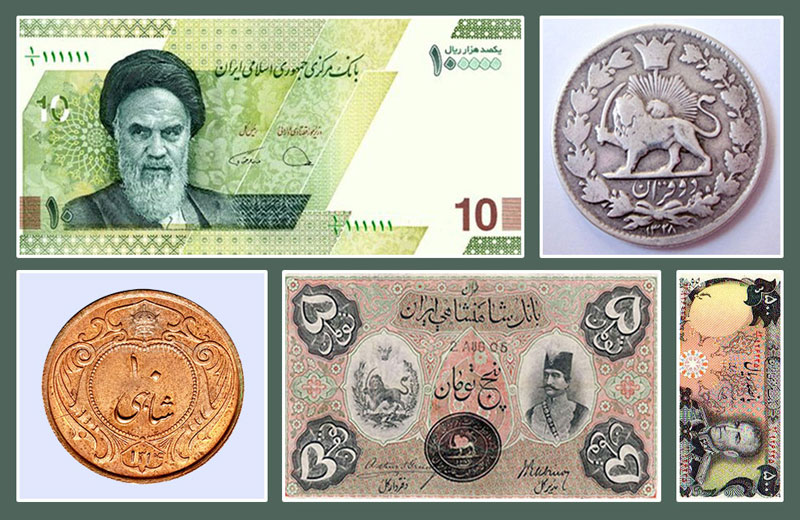

Iran’s currency was first introduced during the time of Agha Mohammad Khan (Qajar) some 232 years ago in the form of a metal coin. The currency was called ‘Toman’ back then, which equaled to 10 Rials. The country’s currency later changed from Toman to Rial during the reign of Reza Pahlavi Shah in 1928. The official currency is now Rial, but while Iranian banknotes and coins are printed in Rial, Iranian people still use the Toman unit when they talk about prices. This is the story of a currency that has gone through a lot of ups and downs through its more than 200 years of existence in Iran. In the present article, we discuss the history of Iran’s Rial, the major historical events that affected the value of this currency, the current status of it compared to the world’s most widely used reserve currency, the US Dollar, as well as many other details that we hope could be useful for the readers.
A historical overview of Iranian Rial
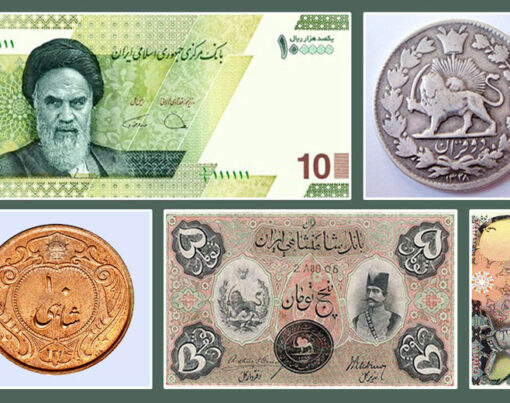
Rial is the official currency of the Islamic Republic of Iran. The creation of this Iranian unit of currency dates back to the year 1789. With the ascendency of the Qajar dynasty in that year, Agha Mohammad Khan, the first Qajar king and the founder of the dynasty chose Rial as the official currency of the country until Mohammad Shah Qajar, the third king of the Qajar decided to replace the Rial with the Qiran in 1825 along with the economic reforms he envisioned for Iran back then. This king suggested an exchange rate of 1 Qiran = 20 Shahi and the Qiran became the official currency in Iran, replacing the Rial.
The new currency was only in the form of coins not banknotes, ranging from one to five Qiran coins. There were also coins worth half a Qiran which were equal to 10 Shahi. Shahi was a currency in ancient Iran when the Sasani kings ruled over Persia from 224 to 651 AD. With the Muslim conquest of Persia back in 651 AD, the use of this currency came to an end but when the Tahiri dynasty came to power in 821, the first non-Arab dynasty after the collapse of the Sasiani kings, the Shahi once again gained popularity and was one of the official currencies in the Qajar along with the newly created Qiran.
Almost a century later in 1925, the Qajar dynasty collapsed and Reza Shah Pahlavi became the new king of the new Pahlavi dynasty. With the goal of modernizing Iran in mind, Reza Shah began fundamental reforms all across the country in a variety of areas. In line with such reforms, he ordered that the nation of Iran return to the Rial as its official currency, with a 1=1 exchange rate of Qirans for Rials. Today, Iranian banknotes and coins are all in Rial. Iranian coins, which are now made of a copper and nickel alloy, exist in denominations of 50, 100, 250, 500, 1000, 2000, and 5000 Rials.
To save money on minting costs, the Iranian central bank has gradually reduced the size of coins since 1992. Iranian banknotes are printed in a wide range of denominations as well, from 5,000, 10,000, 20,000, 50,000, to 100,000 Rial banknotes, and travel checks worth 500,000 and 1000,000 Rials. All banknotes and coins carry the image of Ayatollah Khomeini, the leader of the 1979 Islamic revolution, on the obverse side. The reverse sides feature various historical and religious sites and landmarks.
Major events that affected the value of the Rial through history
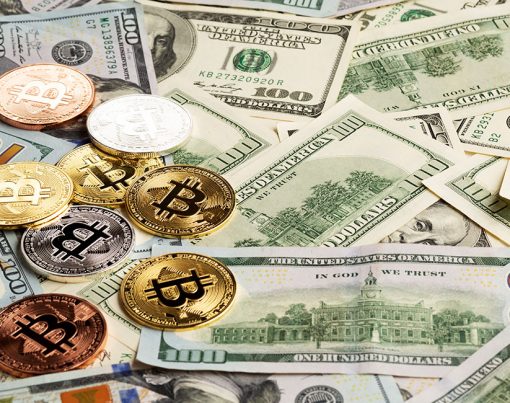
First of all, it should be noted that because the U.S. Dollar is the most widely used reserve currency in the world, the value of most other currencies, including the Iranian Rial, is compared and weighed by the value of the Dollar. In other words, the Dollar acts as a yardstick to determine how much other currencies worth. In the following lines, we take a quick glance at the most important events in modern history that affected the exchange rate of the Rial against the U.S. Dollar, that is, the value of the Rial through historical happenings.
Occupation of Iran and the fall of Reza Shah
Before the Allied occupation of Iran in World War II, the rate of each U.S. Dollar in the Iranian economy was 14 Rials. Simultaneously with the arrival of the Allied army in Iran, which led to the fall of Reza Shah Pahlavi’s government and the jump in inflation from 13.8% to 49.5%, the Dollar exchange rate increased by more than 7% to 15 Rials. The consequences of the occupation of Iran and the prevailing political crisis caused the inflation rate to reach more than 96% in 1942, which brought the price of the Dollar to more than 16 Rials.
The nationalization of Iran’s oil industry
This historical event happened in 1950 and resulted from a movement in the Iranian parliament (Majlis) to seize control of Iran’s oil industry, which till then had been run by private companies and was largely controlled by foreign interests. The nationalization of Iran’s oil industry was accompanied by the imposition of sanctions on the sale of oil and a decrease in foreign exchange earnings for Iran. For this reason, in 1951, the price of the U.S. Dollar fluctuated to more than 60 Rials.
The 1953 Iranian coup d’état
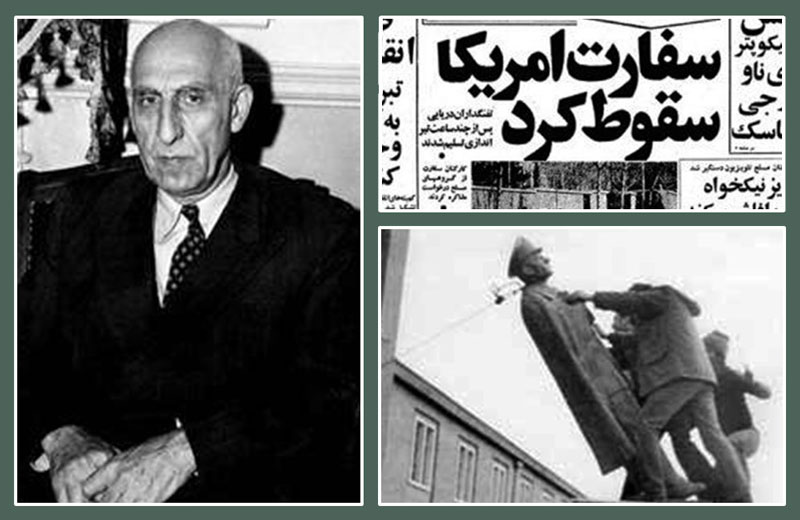
Due to the currency crisis and the occurrence of a coup against the Mossadegh government in 1953, the U.S. Dollar exchange rate reached its highest level since 1922. Each U.S. Dollar was exchanged for 130 Rials at the time after the coup d’état of 19 August happened. However, under the influence of the exchange rate stabilization bill that the Mossadegh government had approved by the parliament before the coup, the dollar exchange rate returned to the range of 90 to 100Rials.
The Islamic Revolution of 1979
Before the occurrence of this turning point in Iran’s modern history, the price of the U.S. Dollar was at the rate of 70 Rials for about 10 years, with a slight fluctuation range. The event of the Revolution in 1979, however, ended the rule of the single Dollar at 70 Rials. The free Dollar exchange rate reached 100 Rials in the last days of 1979. That is, immediately after the revolution, not only the Dollar exchange rate to the Rial got divided into the open market rate and the official rate, but the value of the Iranian Rial against the U.S. Dollar fell by 43 percent.
Iran hostage crisis
The devaluation of the Rial continued in 1979, following the seizure of the US embassy by Iranian students known as “followers of the Imam’s line”. At the same time as the 444-day hostage-taking of American diplomats occurred, Iran was first subjected to an arms embargo on the orders of the then President of the United States, Jimmy Carter. The occurrence of a diplomatic crisis between Iran and the US raised the free market price of the dollar to 140 Rials.
Iran–Iraq War (1980)
With the beginning of the war which lasted for nearly 8 years, the Dollar exchange rate in the open market turned considerably higher in price compared to the official exchange rate, and while each U.S. Dollar was traded at 140 Rials in the open market, the official dollar exchange rate was announced by the central bank equal to 70 Rials. The continuation of the war led the average price of the Dollar in 1980 to reach 200 Rials. Following the release of American diplomats in 1981, trade relations between Iran and the United States were re-established to some limited extent. However, as the cost of the war continued to rise, the central bank finally increased the official dollar rate by 10 Rials to 80 Rials. This was while in the free currency market, every U.S. Dollar was exchanged against 270 Iranian Rials.
UN Security Council Resolution 598 and the official end of the war
The upward trend in the Dollar continued until July 1988, when Iran adopted Resolution 598 and began formal efforts to end the eight-year war with Iraq. Since 1986, the inflation rate of Iran’s economy has reached more than 20 percent and the country’s economic growth has been negative. This meant a fourfold devaluation of the national currency. Accordingly, the free dollar exchange rate in the open market during 1987 reached nearly 1000 Rials. This rate was on the eve of the adoption of the resolution of 1450 Rials.
On July 17, which coincided with the announcement of the adoption of this resolution by Iran, the price of the Dollar dropped by 400 Rials just a few hours later. In total, Iran’s acceptance of the offer to end the war reduced the exchange rate by about 860 Rials. However, the positive shock of the adoption of Resolution 598 in the foreign exchange market was very short-lived, and the average free dollar exchange rate reached 960 Rials by the end of 1988. It is worth mentioning that in the first 10 years after the revolution, the Iranian economy witnessed a growth of 1271% free Dollar exchange rate.
The Joint Comprehensive Plan of Action (JCPOA) 2015
After the adoption of the JCPOA, commonly known as the Iran nuclear deal or Iran deal between Iran and 5+1 countries together with the European Union, it was expected that the lifting of Iran’s nuclear-related sanctions would lead to a more stable Rial, with the price of the dollar even going down as a result of promised economic boom following the deal. Numbers, however, proved otherwise.
The price of the Dollar in July 2013, before the beginning of the 11th government in Iran, was 32710 Rials, which was a slight fluctuation of the Dollar before the implementation of the JCPOA in January 2015. At the same time and with the implementation of the nuclear deal, the average price of the dollar reached 36730 Rials, which showed an increase of 4000 Rials compared to the early days of the new government. But after the implementation of the deal, the fluctuations of the foreign exchange market became more severe than before. The price of the Dollar first reached 35890 Rials after the implementation of the nuclear deal in February 2015, but it increased even higher and reached 46000 Rials in February 2017. Therefore, the price of the Dollar increased by over 10000 Rials in the first two years after the nuclear deal, a deal that was supposed to lift economic sanctions and therefore stabilize the price of the dollar compared to the Rial but it actually acted otherwise.
Why did the Rial devalue so much during recent years?
The Rial has suffered even a sharper devaluation since United States President Donald Trump decided to unilaterally withdraw from the Iran nuclear deal back in 2018. By pulling the U.S. back from the JCPOA, Trump reimposed the previous sanctions and even set up new ones in line with his policy of ‘maximum pressure’ against Iran. As a result, Iran’s currency lost value to unprecedented amounts. The free dollar exchange rate in Iran’s open market reached over 100,000 Rials per Dollar a few weeks after Trump’s withdrawal and experienced an even further increase the following year. But it was in 2020 that the Rial experienced the sharpest devaluation ever when the free Dollar exchange rate reached 180,000 Rials. Currently, the US dollar is worth nearly 250,000 Rials but the exchange rates change frequently and you should reach credible online platforms to know about the exact and up-to-date exchange rates.
The Rial and the US Dollar compared in picture
The following table shows Dollar to Rial the exchange rates through time:
| Dollar/Rial exchange rate through history | |||
| Year | Average Price | Highest Price | Lowest Price |
| 1925 | 15 Rials per one Dollar | 15 Rials per one Dollar | 15 Rials per one Dollar |
| 1950 | 60 Rials per one Dollar | 60 Rials per one Dollar | 60 Rials per one Dollar |
| 1953 | 90 Rials per one Dollar | 90 Rials per one Dollar | 90 Rials per one Dollar |
| 1979 | 85 Rials per one Dollar | 70 Rials per one Dollar | 100 Rials per one Dollar |
| 1980 | 140 Rials per one Dollar | 140 Rials per one Dollar | 140 Rials per one Dollar |
| 1981 | 140 Rials per one Dollar | 140 Rials per one Dollar | 140 Rials per one Dollar |
| 1982 | 200 Rials per one Dollar | 200 Rials per one Dollar | 200 Rials per one Dollar |
| 1983 | 270 Rials per one Dollar | 270 Rials per one Dollar | 270 Rials per one Dollar |
| 1984 | 350 Rials per one Dollar | 350 Rials per one Dollar | 350 Rials per one Dollar |
| 1985 | 450 Rials per one Dollar | 450 Rials per one Dollar | 450 Rials per one Dollar |
| 1986 | 580 Rials per one Dollar | 580 Rials per one Dollar | 580 Rials per one Dollar |
| 1987 | 610 Rials per one Dollar | 610 Rials per one Dollar | 610 Rials per one Dollar |
| 1988 | 740 Rials per one Dollar | 740 Rials per one Dollar | 740 Rials per one Dollar |
| 1989 | 850 Rials per one Dollar | 850 Rials per one Dollar | 850 Rials per one Dollar |
| 1990 | 990 Rials per one Dollar | 990 Rials per one Dollar | 990 Rials per one Dollar |
| 1991 | 960 Rials per one Dollar | 960 Rials per one Dollar | 960 Rials per one Dollar |
| 1992 | 1200 Rials per one Dollar | 1200 Rials per one Dollar | 1200 Rials per one Dollar |
| 1993 | 1410 Rials per one Dollar | 1410 Rials per one Dollar | 1410 Rials per one Dollar |
| 1994 | 1420 Rials per one Dollar | 1420 Rials per one Dollar | 1420 Rials per one Dollar |
| 1995 | 1490 Rials per one Dollar | 1490 Rials per one Dollar | 1490 Rials per one Dollar |
| 1996 | 1800 Rials per one Dollar | 1800 Rials per one Dollar | 18000 Rials per one Dollar |
| 1997 | 2630 Rials per one Dollar | 2630 Rials per one Dollar | 2630 Rials per one Dollar |
| 1998 | 4030 Rials per one Dollar | 4030 Rials per one Dollar | 4030 Rials per one Dollar |
| 1999 | 4440 Rials per one Dollar | 4440 Rials per one Dollar | 4440 Rials per one Dollar |
| 2000 | 4780 Rials per one Dollar | 4780 Rials per one Dollar | 4780 Rials per one Dollar |
| 2001 | 6460 Rials per one Dollar | 6460 Rials per one Dollar | 6460 Rials per one Dollar |
| 2002 | 8630 Rials per one Dollar | 8630 Rials per one Dollar | 8630 Rials per one Dollar |
| 2003 | 8130 Rials per one Dollar | 8130 Rials per one Dollar | 8130 Rials per one Dollar |
| 2004 | 7920 Rials per one Dollar | 7920 Rials per one Dollar | 7920 Rials per one Dollar |
| 2005 | 8320 Rials per one Dollar | 8320 Rials per one Dollar | 8320 Rials per one Dollar |
| 2006 | 8740 Rials per one Dollar | 8740 Rials per one Dollar | 8740 Rials per one Dollar |
| 2007 | 9040 Rials per one Dollar | 9040 Rials per one Dollar | 9040 Rials per one Dollar |
| 2008 | 9220 Rials per one Dollar | 9220 Rials per one Dollar | 9220 Rials per one Dollar |
| 2009 | 9350 Rials per one Dollar | 9350 Rials per one Dollar | 9350 Rials per one Dollar |
| 2010 | 9660 Rials per one Dollar | 9660 Rials per one Dollar | 9660 Rials per one Dollar |
| 2011 | 10500 Rials per one Dollar | 10000 Rials per one Dollar | 11000 Rials per one Dollar |
| 2012 | 12000 Rials per one Dollar | 11000 Rials per one Dollar | 13000 Rials per one Dollar |
| 2013 | 16000 Rials per one Dollar | 14000Rials per one Dollar | 18000 Rials per one Dollar |
| 2014 | 26500 Rials per one Dollar | 15000 Rials per one Dollar | 38000 Rials per one Dollar |
| 2015 | 34500 Rials per one Dollar | 33000 Rials per one Dollar | 36000 Rials per one Dollar |
| 2016 | 39240 Rials per one Dollar | 37480 Rials per one Dollar | 41000Rials per one Dollar |
| 2017 | 40250 Rials per one Dollar | 38000 Rials per one Dollar | 42500 Rials per one Dollar |
| 2018 | 96335 Rials per one Dollar | 42000 Rials per one Dollar | 150670 Rials per one Dollar |
| 2019 | 134535 Rials per one Dollar | 111500 Rials per one Dollar | 157570 Rials per one Dollar |
| 2020 | 231750 Rials per one Dollar | 149500 Rials per one Dollar | 314000 Rials per one Dollar |
| 2021 | 250500 Rials per one Dollar | 249000 Rials per one Dollar | 252000 Rials per one Dollar |
Why does Iran have three foreign exchange rates? (the open market rate, the official rate, and the NIMA rate)
Currently, Iran has three exchange rates; the open market rate, the official rate, and the NIMA rate.
What is the open market rate?
This is the exchange rate that most accurately reflects how many Rials it takes to buy one U.S. Dollar or the other way round for people in and out of Iran. People who want to exchange Rial to U.S. Dollar or vice versa will do the trade with this exchange rate, the most accessible and commonly quoted rate throughout the country.
What is the NIMA rate?
NIMA is the Persian acronym for an online currency system launched by the Central Bank of the Islamic Republic of Iran (CBI) in April 2018. Put simply, it’s a market where Iranian exporters can sell their foreign currency earnings for Iranian Rials and where businesses can buy currency from the government at a rate that is only a little better than the free market rate (usually 15 percent cheaper).
What is the “official” exchange rate in Iran?
The official exchange rate is 42,000 Rials to 1 U.S. Dollar. It is a government-subsidized rate that values the Rial far, far above the open market rate. Currently, the official rate is only used to import essential goods. To protect Iranian consumers, the official rate is also used to buy essential humanitarian imports that are exempt from US sanctions.
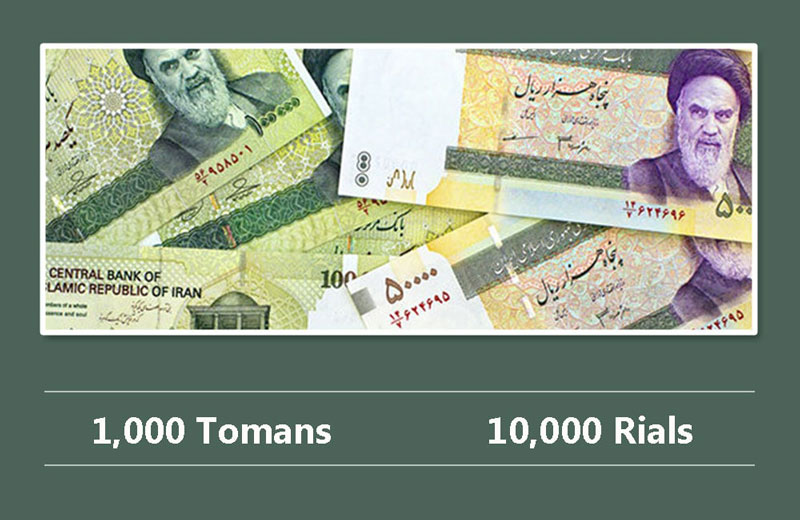
It is worth mentioning that the value of the Iranian Rial is tightly controlled by the central bank. The state ownership of oil export earnings and its large reserves, supervision of letters of credit, together with current – and capital outflow accounts – outflows allows management of demand. In a move to regain the lost value of the Rial, Iranian parliament (Majlis) approved last year a government’s bill proposed by the Central Bank of Iran (CBI) for eliminating four zeros from the national currency, CBI governor Abdolnaser Hemmati announced in this regard that during the open session of the Majlis, it was also approved that the national currency will be changed from ‘Rial’ to ‘toman’ which equals 10,000 Rials. Therefore, the country’s CBI began issuing new banknotes last year in which 4 zeros are kind of blurred and hardly recognizable.
The following video will tell you some more surprising facts about the Rial.
USD/IRR2 [1] exchange rate
[1] Because Iran has two main exchange rates; the official rate and the open market rate, and only the latter is used for currency exchange in the market, it is referred to here as IRR2.
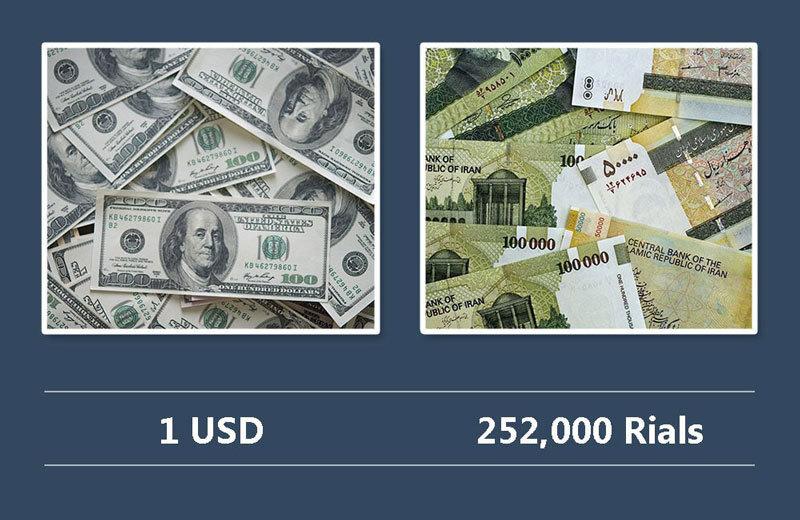
Due to a variety of reasons, including especially international sanctions against Iran, the price of each U.S. Dollar in the Iranian Rial is frequently changing on a daily basis. The exchange rate is now (at the time of this writing) 249000 Rials per one Dollar. But for those who need to know the exact and updated exchange rates, the Trustply website has introduced a new service, providing its users with the latest hourly exchange rates of not only Dollar to Rial and vice versa, but of most other currencies around the world. To see the most up-to-date exchange rates of US Dollar to Iran’s Rial and vice versa, click on the link below:
CAD/IRR2 exchange rate

The same story is true for other popular currencies. During recent years, the Iranian Rial has seen a sharp decline in value compared to currencies such as the Canadian Dollar, the Pound, the Euro, etc. The latest exchange rate between the Rial and the Canadian Dollar, for example, is now 198.500 Rial per one Dollar. This is while less than a year ago, the value of the Rial was 100.900 per Dollar. To see the most up-to-date exchange rates of CAD to Iran’s Rial and vice versa, click on the link below:
EUR/IRR2 exchange rate
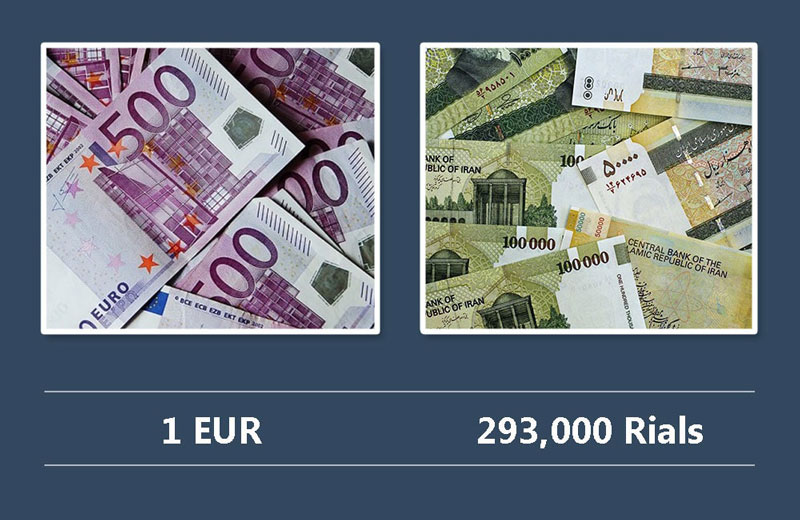
Euro is another popular currency that is the official money in 19 out of 27 European countries. Euro is the second-largest and second-most traded currency in the foreign exchange market after the United States Dollar. The value of the Rial compared to the Euro is now about 288.860 Rial per one Euro. Last year, each Euro was worth about 180,650 Rials. To see the most up-to-date exchange rates of EUR to Iran’s Rial and vice versa, click on the link below:
GBP/IRR2 exchange rate
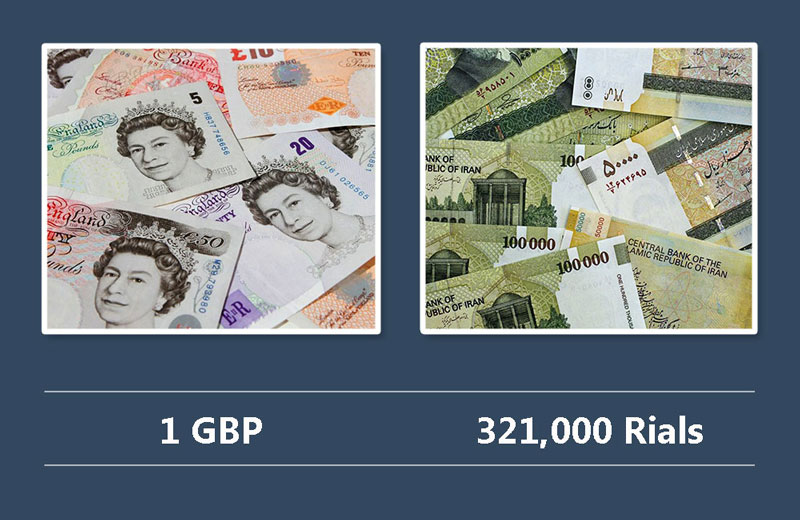
The Pound sterling (GBP), simply the Pound is the official currency of the United Kingdom, Jersey, Guernsey, the Isle of Man, Gibraltar, South Georgia, and the South Sandwich Islands, the British Antarctic Territory, and Tristan da Cunha. The value of the Pound in Rial is more than that of the U.S. Dollar, the Canadian Dollar, and the Euro. currently, each Pound is worth almost 327.995 Rials. The value of the Pound to the Rial was 208.800 Rials per Pound last year around the same time. To see the most up-to-date exchange rates of GDP to Iran’s Rial and vice versa, click on the link below:
All in all, the purpose of the present article was to provide the readers with some basic and useful information about the history, the value, and the exchange rate of this Iranian currency compared with the U.S. Dollar as well as other popular currencies. It was also aimed at introducing one of the newest services provided by the Trustply website which offers its users access to the latest hourly exchange rates of most currencies worldwide.
—
Sources: euronews.com | aljazeera.com | exchangerates.org.uk | ceicdata.com | Google.com | jamaran.news