
Exchange of foreign currency is a necessity in today’s world. The possibility of exchanging different currencies at different times and in different ways is essential both for businesses as a facilitator of cross-border commerce, as well as for people who travel between countries and need to exchange currencies for personal needs. Just like any business that involves the movement of money, there is potential for money laundering and other monetary problems that may arise during currency exchange. It is therefore very crucial that countries set up certain rules and regulations to protect people and businesses’ money and prevent money-related crimes from happening. Different countries have different currency exchange laws, commonly referred to as Exchange controls, and it is mainly because nearly every country has its own currency that differs in value from currencies of other countries. Foreign exchange controls are various forms of controls imposed by a government on the purchase/sale of foreign currencies by residents, on the purchase/sale of local currency by nonresidents, or the transfers of any currency across national borders. These controls allow countries to better manage their economies by controlling the inflow and outflow of currency, which may otherwise create exchange rate volatility. Countries with weak and/or developing economies generally use foreign exchange controls to limit speculation against their currencies. They may also introduce capital controls, which limit foreign investment in the country.
Exchange controls can be enforced in a few common ways. A government may ban the use of a particular foreign currency and prohibit locals from possessing it. Alternatively, they can impose fixed exchange rates to discourage speculation, restrict any or all foreign exchange to a government-approved exchanger, or limit the amount of currency that can be imported to or exported from the country. In the present article, the focus of the passage is on the exchange controls that Canada has provisioned in regard to exchanging currency and other related monetary issues. To be more specific, the article concerns only travelers, not businesses, and discusses Canada’s laws that are useful for people who come from another country to Canada or go from Canada to another foreign country and need to exchange currency. The Canadian foreign exchange controls allow the movement of funds both to and from the country. You can freely buy and sell any foreign currency. However, there are some restrictive rules that people and businesses that deal with currency exchange and money in general, would take into account;
What is no-more-than-$10,000 rule about?
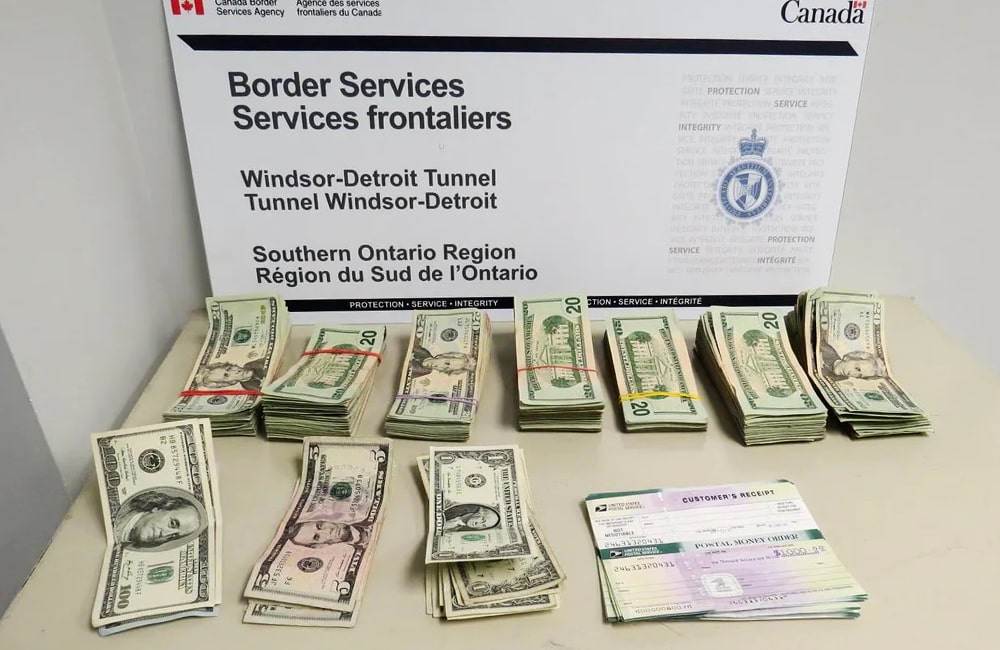
For all travelers around the world (non- residents of Canada) who arrive with over $10,000 in Canada, you should have to declare this amount of money that you carry with you at the customers before you even enter the country. It doesn’t make any difference weather this amount of money is in the form of check, cash, or other monetary instruments, you have to declare it at the airport. This amount could also include Canadian or foreign currency or a combination of both. As long as you declare the amount of money you have, there are no restrictions on the amount of money you can bring into or take out of Canada, nor is it illegal to do so.
Where should I report this amount of money that I have?
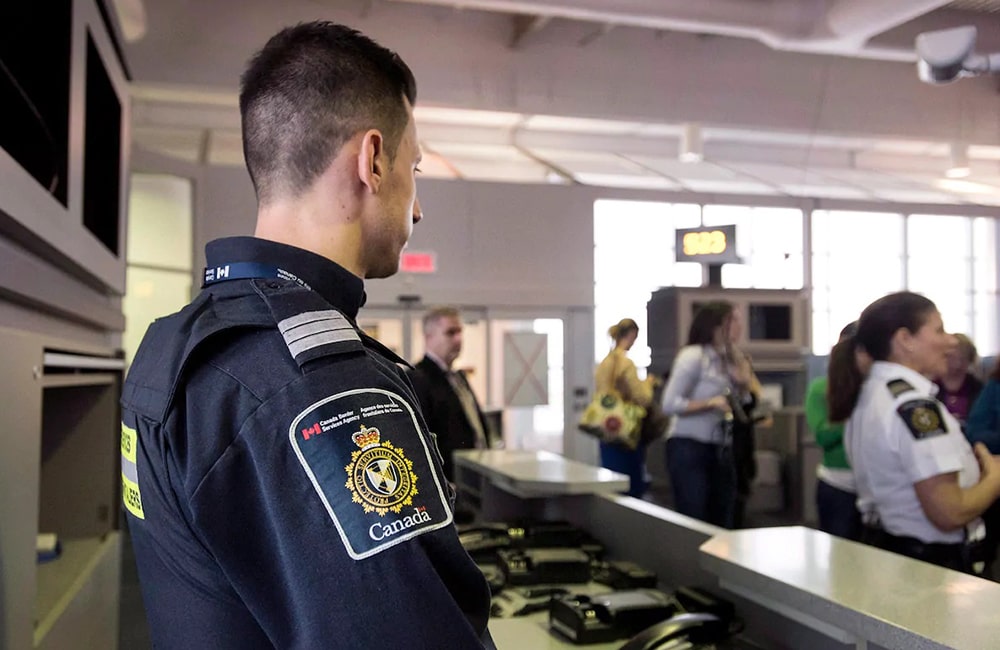
When you arrive in Canada with Can$10,000 or more in your possession, you must report it on the Canada Border Services Agency (CBSA) Declaration Card (if one was provided to you), on an Automated Border Clearance kiosk or a Primary Inspection Kiosk, or in the verbal declaration made to a border services officer. And when departing Canada by air with Can$10,000 or more in your possession, you must report to the CBSA office within the airport, before clearing security. Prior to departing by land, boat, or rail, report to the CBSA office nearest your location. Keep in mind that this law applies to all travelers, couriers and even if you are carrying money on behalf of someone else, you must declare the money anyway.
What happens to the information I provide to the CBSA when reporting my money?
The completed forms are sent to the Financial Transactions and Reports Analysis Centre of Canada (FINTRAC) for assessment and analysis. The information provided on the currency reporting forms is subject to the Privacy Act and is collected under the authority of the Proceeds of Crime (Money Laundering) and Terrorist Financing Act (PCMLTFA). You can contact the CBSA or FINTRAC for more information or contact the Border Information Service by telephone.
How should I report this amount of money I have?
Report it in person
If you are entering or leaving Canada, you must complete a report containing the information prescribed in Schedule I, II, and III of the Cross-Border Currency and Monetary Instruments Reporting Regulations to the CBSA. This reporting obligation can be fulfilled by completing the Cross-Border Currency or Monetary Instruments Report – Individual (Form E677). If the currency or monetary instruments you are reporting are not your own, you can fulfill the reporting obligation by completing the Cross-Border Currency or Monetary Instruments Report – General (Form E667). Hand the form to a border services officer at the nearest CBSA office that is open at the time you are travelling.
Report it through email
If you are sending currency or monetary instruments to Canada by mail, attach a Universal Postal Convention (UPC) declaration, which is available at your nearest postal office, to the parcel and include a report containing the information prescribed in Schedule I, II, and III of the Cross-Border Currency and Monetary Instruments Reporting Regulations. A completed Form E667 currency report placed inside your package can be used to meet this reporting requirement.
When exporting currency or monetary instruments from Canada by mail, attach a Canada Post Customs Declaration form (CN23), which is available at your nearest postal office, to the parcel, include a report containing the information prescribed in Schedule I, II, and III of the Cross-Border Currency and Monetary Instruments Reporting Regulations, and submit a copy of the completed currency report to the nearest CBSA office. This reporting obligation can be fulfilled by completing and submitting Form E667.
Additional postal requirements may exist. Contact Canada Post for more information.
Report it by courier
If you are sending currency or monetary instruments to or from Canada by courier, the person in charge of the conveyance or the courier must complete a report containing the information prescribed in Schedule I, II and III of the Cross-Border Currency and Monetary Instruments Reporting Regulations. The Cross-Border Currency or Monetary Instruments Report made by Person in charge of conveyance (Form E668) may be used to fulfill this obligation. Attach the completed report to the Cross-Border Currency or Monetary Instruments Report – General (Form E667), which you, the importer or exporter, should complete and provide to the courier.
Why do I need to report my money when crossing the border?
To help fight money laundering and terrorist financing, the Government of Canada introduced the PCMLTFA in 2001.
The CBSA is responsible for administering and enforcing Part 2 of the PCMLTFA to help the Government of Canada to:
- Detect and deter money laundering and terrorist financing activities;
- Facilitate the investigation and prosecution of related offences;
- Respond to the threat posed by organized crime; and
- Fulfill international commitments to fight transnational crime.
What if I don’t report this amount of money?
The CBSA has the authority to seize all currency and monetary instruments if the entire value is not reported. They may be returned after a penalty is paid. Penalties range from Can $250 to Can $5,000. The CBSA will not return the funds if it is suspected they are the proceeds of crime or funds for financing terrorist activities. You can choose to file a review for items that have been seized.
What are suspicious transactions and suspicious transaction reports?
Suspicious transactions are transactions which can be made in cash or other forms of currency and can give rise to a reasonable ground of suspicion, possibly involving the proceeds of crime, or they appear to be made in circumstances of unusual or unjustified complexity, or they have no economic rationale or bona fide purpose whatsoever. Therefore, whenever there are reasonable grounds to suspect that a transaction or an attempted transaction is related to the commission or attempted commission of a money laundering (ML) or terrorist financing (TF) offence, the government of Canada will require you to submit a suspicious transaction report (STR).
Suspicious transaction report or STR is a report that provides the government of Canada with an expansion on the descriptive details surrounding a transaction that is derived from your assessment of what you are seeing through your business interactions and activities. Additional information, such as nicknames, secondary names, beneficial ownership information, IP addresses, additional account numbers, email addresses, virtual currency transaction addresses and their details, details of purchases or e-transfers, locations, relationships, and background information can also be included in this report. A suspicious transaction report is submitted to the Financial Transactions and Reports Analysis Centre of Canada (FINTRAC) only in respect of a financial transaction for which there are reasonable grounds to suspect that the transaction. Unlike all other reporting obligations, there is no monetary threshold associated with the reporting of a suspicious transaction.
What do the rules about restricted currencies say?
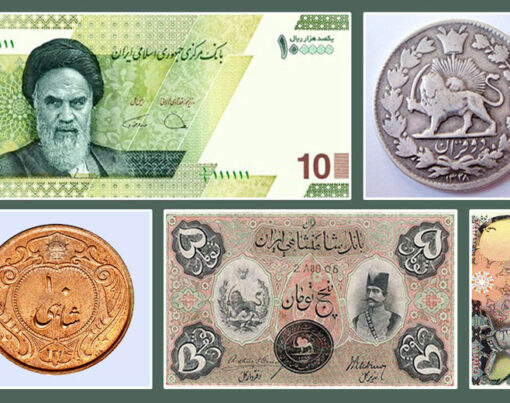
Certain currencies are restricted in Canada and much difficult to exchange. Many reasons including economic and political factors along with intervention by the financial institutions can make a currency restricted. The list of restricted currencies or, in other words, blocked currencies changes from time to time, so you have to keep a tab on the latest updates. Some examples of restricted currencies include the Angolan Kwanza, North Korean Won, Nepalese Rupee, etc.
Check with the embassy or consulate in Canada of the country you are planning to visit to make sure you are allowed to import or export its currency. Apart from a few countries, you can freely buy and sell foreign currency in Canada. The mostly traded foreign currency is the US dollar followed by other ones like UK pound sterling, European euro, Australian dollar, Hong Kong dollar. It’s advisable to check the rates and fees thoroughly before you proceed to exchange any foreign currency. The currency exchange rate tells you how much your Canadian money is worth in the local currency. Whenever you exchange any foreign currency, you are engaging in buying and selling foreign funds at a set price known as the exchange rate. You can check the conversion rates of different currencies against Canadian dollar using the online converter of Bank of Canada. There are many ways to exchange your foreign currency in Canada when you are in this country as a foreigner, or when you want to go abroad and need to exchange currency in Canada before traveling abroad.

Where can I exchange currencies in Canada?
The fact in this regard is that when traveling to any foreign country that doesn’t use the same currency as your own, it’s a good idea to exchange currencies before departing or upon arrival at your destination. Canada uses the Canadian dollar, which is a global currency that’s easy to exchange to. While there are many places that exchange currency, some are more accessible and give a better bang for your buck than others.
Banks
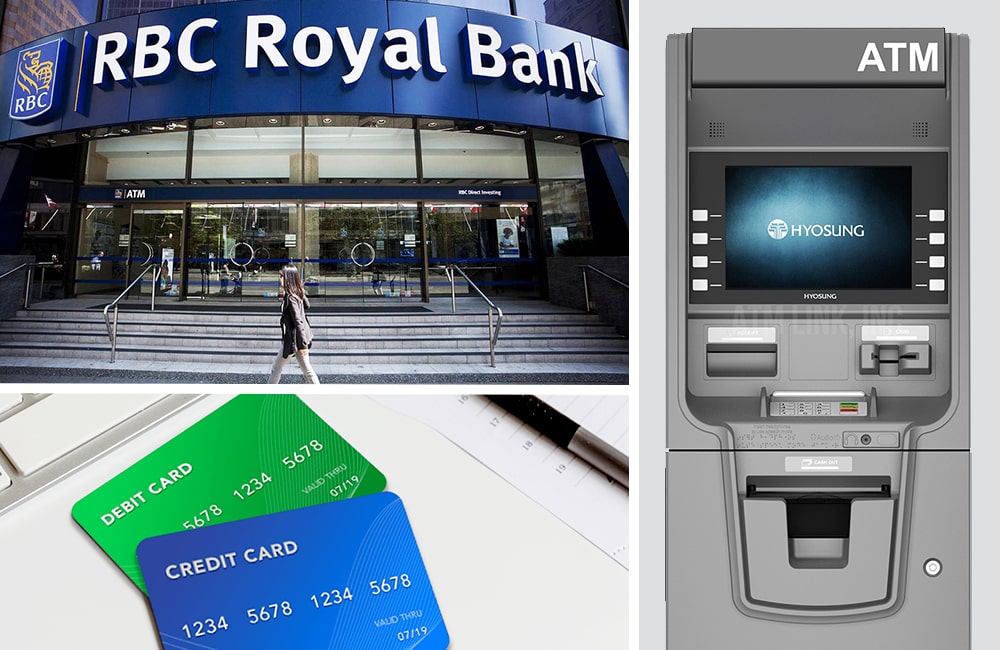
Banks are great places for non-Canadians to exchange their money. Banks are reputable institutions that can exchange foreign currency into Canadian dollars securely, and they have branches throughout Canada, so finding one shortly after arriving at your destination should be fairly simple.
Some Canadian banks include:
- Royal Bank of Canada
- Citibank Canada
- Scotiabank
- Bank of Montreal
- HSBC
- Canadian Imperial Bank of Commerce
- Toronto-Dominion Bank
Travelers can also exchange their home currency to Canadian dollars at a local bank before departing for Canada.
ATMs
ATMs are a great way to get foreign currency in an instant, but using an ATM will likely cost a few extra bucks in fees. To avoid hefty fees, research local banks ahead of time to see which ones have agreements with banks in Canada that minimize the fees or waive them altogether. Generally, foreign banks that have branches in Canada or are part of the Global ATM Alliance likely won’t charge major fees to withdraw money, if any at all. If you cannot avoid ATM fees, then keep them at a minimum by taking out large amounts of cash less often. Also, use only ATMs at actual banks and not at convenience stores or on the street, as fees will likely be higher at those locations.
Debit Cards and Credit Cards
Foreign debit cards are accepted in most places in Canada, particularly Visa and Mastercard. That being said, a swipe of one of these debit cards will incur fees as well. If you must use a card, then use a credit card, preferably one that has no foreign transaction fees or exchange rate fees.
Pre-paid cards
Some financial institutions offer pre-paid travel cards in foreign currencies. They may have higher fees than credit and debit cards, so check the terms and conditions and costs before you decide to travel with one. You can usually replace a pre-paid travel card as you would a lost or stolen travelers’ check. Be aware that pre-paid cards may not be accepted at some hotels and car rental companies, and may be difficult to use at the ATM machines of foreign banks.
Online exchange
Nowadays, it’s possible to exchange money online using a currency exchange site. While it might seem confusing to do so, it’s actually rather easy and can save a lot of money on fees. This is probably the best way to go about exchanging foreign currency into Canadian dollars.
Calforex is ideal for travelers already in Canada who want to exchange their Canadian currency back to their home currency. Calforex has branches located throughout Canada and also offers the ability to buy and sell currency online.
Globex 2000 is a great way to exchange money easily, without any fees or commission. Users simply log onto the website and choose which currency they want and how much. The money is delivered within three to four business days or can be picked up in person.
Travelex is a well-known currency exchange business. Once users exchange what they need, they can have the cash delivered to their homes or pick it up at a physical branch. There are no exchange rate fees, and those who exchange over $1,000 can have the money shipped for free. The company also offers a bank card and an app to make exchanges easy, and the card awards mileage points for making exchanges.
Airports and Hotels
Although airports and hotels are easy and convenient options for converting currency to Canadian dollars, the exchange comes at a cost. Most international airports in Canada have currency exchange booths, many open 24/7. It is advisable to use them only on emergencies, as they tend to have very high fees. Check the current exchange rate on your phone before actually handing over the money to get an idea if the exchange is worth it or not. If it’s just a few dollars extra, then it’s okay to do so. Likewise, if the exchange rate at a hotel isn’t great, either, ask the concierge where to go instead.
—
Sources;
4- travel.gc.ca
5- accu-rate.ca