
1- First of all, why do we have so many currencies in the word?
During long periods in history, countries have relinquished their national currencies to an international one. Soon, they realized that having a unique currency allows each individual country to have independent monetary policies. In addition, countries like to have a currency of their own because the inflation rate in different countries tends to be different. And that every country sees itself as an independent entity with a sense of national pride. As they have a flag of their own, a national anthem of their own, a map of their own, etc., they also like to have the currency of their own to feel more politically independent and self-sufficient. With this in mind, let’s find out some of the most amazing facts about different currencies that you may not be aware of till today;
2- The study of money is called numismatics;
Numismatics is the study or collection of currency, including coins, tokens, paper money, medals and related objects. Numismatists study the physical attributes of the payment media rather than the use and function in an economy.
3- What was the first coin money in history?
Coins were introduced as a method of payment around the 6th or 5th century BCE. The invention of coins is still shrouded in mystery: According to Herdotous (I, 94), coins were first minted by the Lydians, while Aristotle claims that the first coins were minted by Demodike of Kyrme, the wife of King Midas of Phrygia.
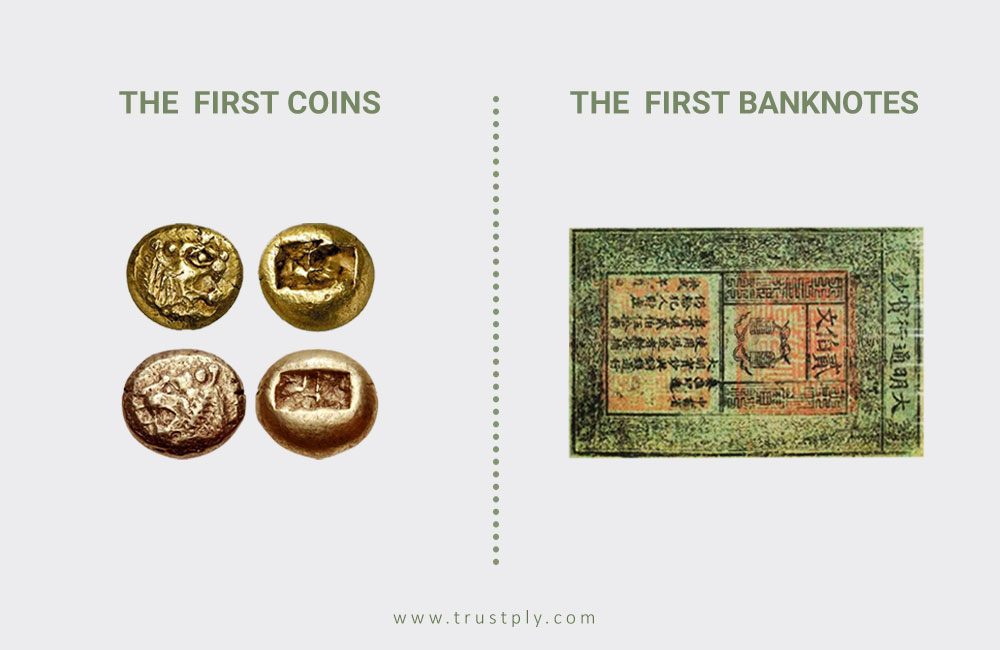
4- What was the first paper money in history?
Paper bills were first used by the Chinese, who started carrying folding money during the Tang Dynasty (A.D. 618-907), mostly in the form of privately issued bills of credit or exchange notes and each being about the size of a sheet of A4 paper. This first paper money known as “Jiaozi” was printed by a group of merchants in Sichuan during the reign of Emperor Zhenzong back then.
5- What are the worst currency devaluations in history?
a. The German mark (DM): 1923:
Germany descended into chaos in 1923 as its currency, the mark, quickly devalued. Before World War One (WWI) in 1914, a U.S. dollar was equivalent to four German marks, increasing to around 70 in 1920. In 1923, the country was crippled by the cost of WWI and the subsequent reparation payments it had to pay to other countries. By November of the same year, one dollar was equal to an eye-watering 4 trillion marks!
b. The Zimbabwean dollar (ZWD): 2008-2009:
Due to the financial crisis that year, Zimbabwe’s former currency went from 1,000 ZWD per USD in September 2008 to 300 trillion several months later in February 2009. The hyperinflation led to the Zimbabwe government’s promotion of all business in foreign currencies in January 2009, chiefly the U.S. dollar, euro (EUR) and South African rand (ZAR).
c. The Venezuelan bolivar (VES): 2018:
The economic crisis that has engulfed Venezuela since 2013 took a surprising turn in August 2018 as the Maduro government announced a massive 95% devaluation of the currency. It relaunched its currency as the bolívar soberano, replacing the erstwhile bolívar fuerte, and changed its currency code from VEF to VES.
6- Which country is the largest Counterfeiter?
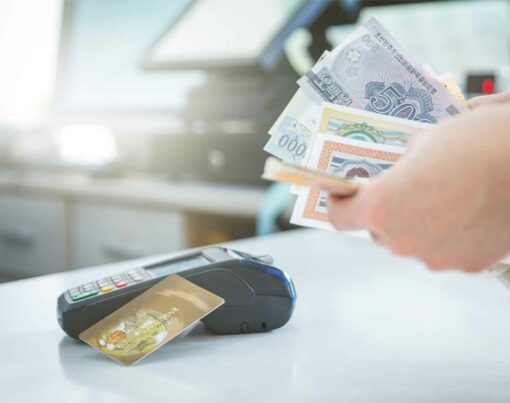
North Korea has mastered the art of counterfeiting U.S. currency, specializing in a perfect replica of our $50 and $100 bills. Their fakes are so impressive that they are referred to as “superdollars,” and require specialized equipment at the Federal Reserve to be detected. As of 2019, an estimated $95 million worth of these fake bills have been identified.
7- What is Money Laundering?
Money laundering is a process that criminals use in an attempt to hide the illegal source of their income. By passing money through complex transfers and transactions, or through a series of businesses, the money is “cleaned” of its illegitimate origin and made to appear as legitimate business profits. Money laundering typically occurs in three phases: First, the initial entry or placement is the initial movement of an amount of money earned from criminal activity into some legitimate financial network or institution. Second is layering, which is the continuing transfer of the money through multiple transactions, forms, investments, or enterprises, to make it virtually impossible to trace the money back to its illegal origin. And Third is integration, it is when the money is freely used legally without the necessity to conceal it any further.
8- What happens to currencies when they are worn out?
Worn out coins are melted down and used to make new coins. Worn out bills are shredded, recycled, and then made into roof shingles or fireplace logs. So the next time you buy one of those starter logs for your fireplace, you could literally be burning money!
9- What is Einstein’s picture doing on Israel’s currency?
Did you know that back in 1952, Albert Einstein, the greatest scientist of all time, was asked to be the President of Israel?! The newly formed Jewish state wished to honor the outstanding physicist for his contributions to science. Einstein turned the offer down but the State of Israel released a 5-lirot note in 1968 with an illustration of the scientist anyway.
10- Who is appearing on more currencies than any other person?
From Australia to Trinidad and Tobago, Queen Elizabeth II’s portrait has graced the currencies of 33 different countries, more than that of any other individual. Canada was the first to use the British monarch’s image, in 1935, when it printed the 9-year-old Princess on its $20 notes.
11- How many currencies do we have in the world?
The United Nations recognizes around 180 currencies as legal tender. Although the number of the independent countries is 197 plus about dozens of dependent territories. The matter is, that some of them don’t have their own money and officially use the foreign currency.
12- What are the strongest currencies in the world?
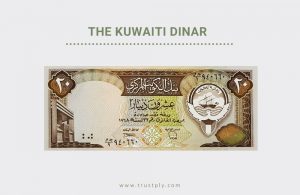
No, the strongest currency in the world is not the US dollar, it is the Kuwaiti dinar or KWD, which was introduced in 1960 and was initially equivalent to one-pound sterling. Kuwait is a small country that is nestled between Iraq and Saudi Arabia whose wealth has been driven largely by its large global exports of oil. You will receive just 0.30 Kuwait dinar after exchanging 1 US dollar.
13- What are the cheapest currencies in the world?
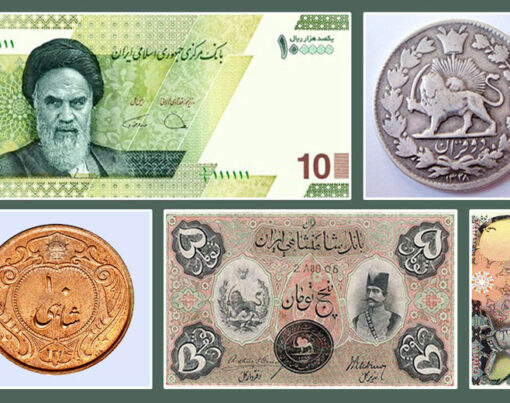
The cheapest currency in the world is Venezuelan Sovereign Bolívar. It suffered significantly from inflation due to U.S. sanctions and more recently from the economic drawbacks of COVID19, so its value became record low in 2020. This currency is also considered the most inflated in the world. Venezuelan Sovereign Bolívar rates: 1 USD = 1,552,540 VES. The second-cheapest currency in the world is the Iranian Rial; 1 USD = ~229,500 IRR2. In the list of the cheapest currencies then come the Vietnamese Dong, the Indonesian Rupiah, the Uzbek Sum, and Guinean Franc.
14- What is the world’s oldest currency?
The British pound is the world’s oldest currency still in use – it’s 1,200 years old. Dating back to Anglo-Saxon times, the pound has gone through many changes before evolving into the currency we recognize today. Sterling silver pennies have been around since 775AD, with King Offa of Mercia generally credited with being responsible for the widespread adoption of the coins. The first fully printed banknotes were introduced in 1853.